
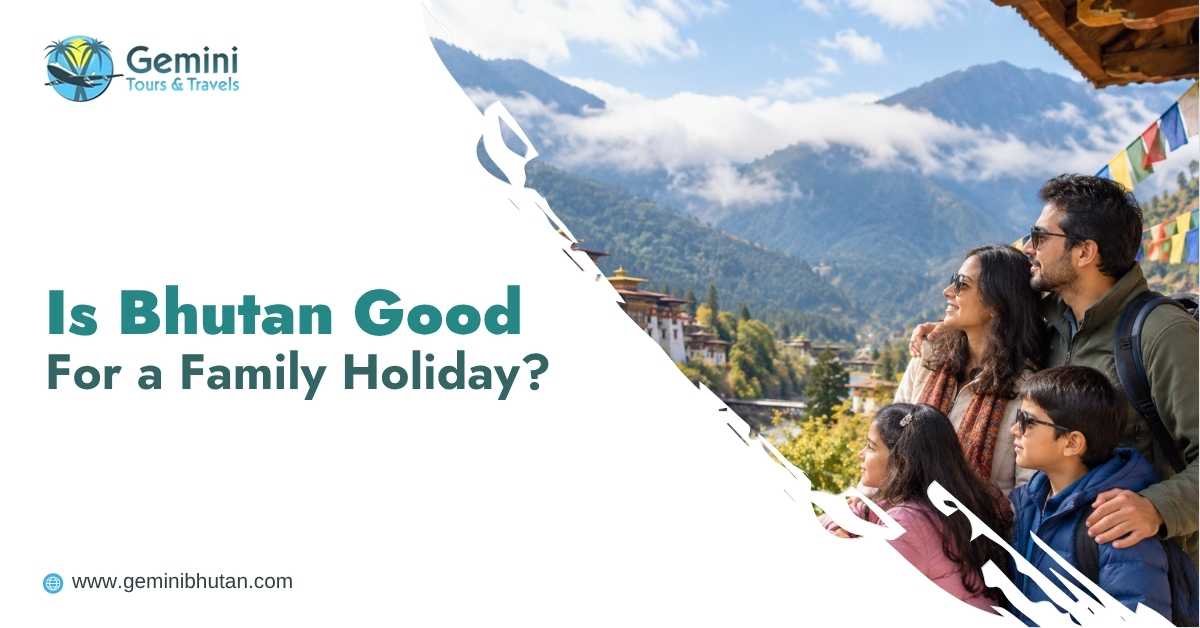


Bhutan has managed to combine its traditional values with modern life. You may see prayer flags hanging outside shops, monks walking down, and families celebrating traditional festivals. As Bhutan shares many common cultural roots, food, and traditions with India, it can be very familiar to Indian visitors.
However, another benefit of travelling to Bhutan from India is that the value of the Indian currency is equivalent to the Ngultrum of Bhutan. In many places, Indian money can be used.
This Bhutan currency guide will give you information on what denominations of money are accepted, how much cash you can take, what payment methods are available, and other useful points to know ahead of your travels.
What is the official currency of Bhutan?
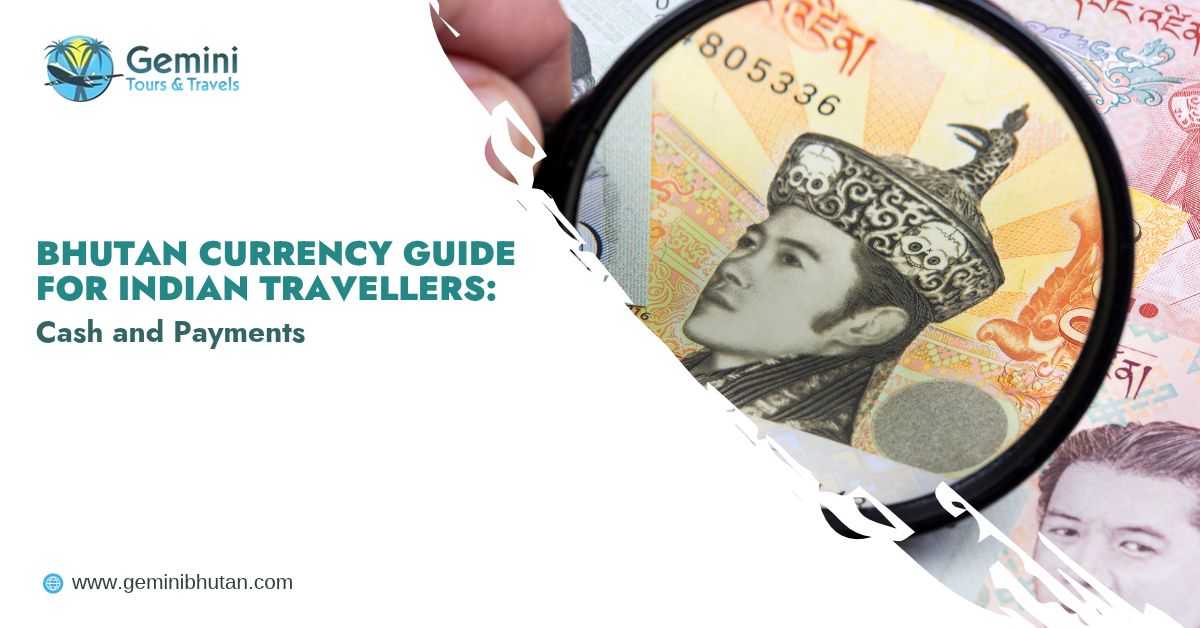
The official currency is the Bhutanese Ngultrum (BTN), represented by the Symbol Nu. The currency is at a fixed exchange rate with Indian Rupees.
For example: 1NU=1INR
So, as an Indian visitor, these calculations can be simpler. For example, a meal costing 500 Nu would cost the same as 500 INR.
There are many payments that can be made in Indian Rupees in Bhutan. However, in smaller towns and areas further out of the main towns, some local businesses may prefer payments in Ngultrum.
Using Indian Rupees in Bhutan: A Guide for Indian Travellers :
Indian rupees are widely accepted throughout Bhutan. You will be able to pay in Indian Rupees at many hotels, restaurants, shops, and transport options.
However, you may find that in smaller shops in more remote areas, they may prefer you to pay in Ngultrum rather than INR. In contrast, large hotels in Thimphu may take INR.
It is better that you carry smaller Indian notes for everyday expenses. They make payments easier and reduce difficulties when shopkeepers cannot provide change.
Use UPI for Digital Payments:
In addition to using cash in Bhutan, Indian visitors can use UPI at participating locations in Bhutan. To do this, you will need to utilise the National QR payment system.
Indian apps that are compatible with UPI include:
- Google Pay
- PhonePe
- Paytm
- BHIM UPI
Once you have identified that a merchant is compatible, you can pay by scanning their QR code. It's better to double-check the amount and then enter your UPI PIN.
However, not all shops and restaurants will allow payments via UPI. Please double-check the settings of your app to make sure you can make international payments and ensure you have internet connectivity. As a backup, it is a good idea to carry some physical cash in case you visit more remote locations.
Using Debit and Credit Cards in Bhutan: what travellers should know
In many places in Bhutan, including hotels, restaurants, and shops, they take payments by international debit/credit cards. Visa and Mastercard are widely accepted; in smaller shops and local restaurants, you may find that cash or UPI is preferred.
Before leaving, please contact your bank to identify if your card can be used internationally in Bhutan. Also find out if there are any fees for foreign payments, currency conversion fees, and ATM withdrawal limits in Bhutan.
Try not to rely on card payment entirely. If your card is not accepted at the payment machine, having some cash will be useful.
Places to exchange Indian rupees for Ngultrum
You can exchange Indian rupees into Bhutanese Ngultrums at authorised currency exchange places.
Places to exchange currency include :
- Major banks in Bhutan
- Authorised currency exchange points
- Currency exchange at Paro International Airport
- Selected larger hotels
- Be careful to check the conditions and charges for exchanges.
You do not necessarily need to exchange all of your money. Just exchange enough to get you started, and remember that you can still use a limited amount of INR.
Recommended cash amount for a Bhutan trip :
It depends on where you are staying, eating, and shopping; you may require different amounts of cash. If you are going on a tour with accommodation and transport included, you may not need to carry as much spending money.
Below is an estimate of daily costs:
- Item cost
- Food and drinks: between 500 INR and 100 INR
- Local transport: between 500 INR and 1000 INR
- Snacks and small purchases: between 200 INR and 400 INR
- Personal spending: between 300 INR and 700 INR
These prices are just an estimate. Your actual expenses may vary according to your travel preferences.
Practical tips for managing money in Bhutan:
A few simple precautions can make everyday payments easier:
- Keep smaller Indian currency notes for routine purchases.
- Activate international payment facilities before departure.
- Have some local currency to pay for things
- Find out the ATM withdrawal costs from your bank
- Do not exchange currency with unauthorised people
- Separate emergency cash from general spending cash
- Only use digital payments in participating places
If you are visiting more remote places in Bhutan, such as Phobjikha Valley or Bumthang, make sure to have enough cash from the larger towns in advance.
How much should you spend on souvenirs in Bhutan?
You do not have to spend much on souvenirs in Bhutan. However, it may be good to allocate a little money in your budget. You can set aside a small amount for your travel budget and check the price before you buy.
1. Traditional Handicrafts and Decorative items:
- Hand-carved wooden masks
- Woven and handmade basketry items
- Small prayer flags and handmade decorative items
- Handmade paper and notepads.
2. Bhutanese textiles and clothing:
- Woven fabrics: Scarves and shawls
- Small fabric items with Bhutanese designs
- Fabrics made in Bhutan using traditional weaving methods
3. Local food products and specialties:
- Tea and honey (produced in Bhutan)
- Packets of spices and chili products
- Snacks and regional products from Bhutan
- Packets with clear labelling and expiry dates
4. Plan your souvenir budget before shopping :
- Allocate some money in your budget especially for souvenirs.
- Shop around for the best price.
- Use small amounts of cash to purchase souvenirs
- Ask for a receipt, particularly if you have spent a lot on handmade goods.
You should check what items you are allowed to take back to India. This may prevent you from taking certain foods, plant-based items, or other restricted items back with you.
Final thoughts:
By preparing a little with regard, you can make your trip in Bhutan very convenient. Many places in Bhutan will take INR, and you can pay in Ngultrum for local purchases. If business allows it, you can also pay with UPI or card.
It is a good idea to have various ways to pay in Bhutan. To make things as easy as possible, you should check the most up-to-date currency guidelines, prepare some cash for your trip, and enable digital payments.
For a more proper Bhutan currency guide you can get connected to Gemini Bhutan to plan smoothly and hassle-free trip plans.
FAQ:
1. What currency should an Indian tourist carry to Bhutan?
Indian tourists can exchange money into Indian Rupees or Bhutanese Ngultrum. Although both currencies are widely accepted in Bhutan, it may be more practical to have local currency for small businesses and more remote locations.
2. Is the Indian rupee equal to the Bhutanese Ngultrum?
1 Bhutanese Ngultrum is equal in value to 1 Indian Rupee.
3. Can you use Google Pay and PhonePe in Bhutan?
Google Pay and PhonePe can be used at supported commercial businesses in Bhutan using cross-border UPI QR payments.
4. Do Bhutanese shops accept Indian Rs 500 notes?
Some shops will take Rs 500 notes; it depends on what payment method the business accepts. Indian tourists must ensure that they do not exceed the limits set by the RBI. This means that they should not hold more than Rs 25,000 in total of both Rs 200 and Rs 500 notes.
5. Can you withdraw money from an ATM in Bhutan using an Indian debit card?
If you have a valid international debit card, you may be able to withdraw money from supported ATMs. Please ensure that your account is set up to make international transactions and check whether there are any withdrawal fees with your bank.
6. Should you exchange Indian rupees into Bhutanese ngultrum before reaching Bhutan?
You may change your money at official money-changing services once you have arrived in Bhutan. It may be a good idea to bring some Indian money with you to pay for initial costs and change money as required.